Champions League Knockout Stage Predictions: Who Could Reach the Final?
 Carlenis Solvi
The Champions League knockout stage is where European football becomes especially unpredictable. After months of group and league-phase matches, the remaining clubs face opponents of the highest quality, and every mistake can have serious consequences. For football fans and bettors, predicting which teams could reach the final requires more than simply identifying the biggest names in the competition.
The knockout rounds are influenced by squad depth, current form, injuries, tactical flexibility, and the draw. A team that looks unbeatable in domestic competition can struggle against an opponent with a completely different playing style. At the same time, an underdog can build momentum and eliminate a more highly rated club.
Why the Knockout Stage Is Difficult to Predict
Unlike a long league campaign, the Champions League knockout stage leaves little room for recovery. In a two-legged tie, one poor performance can create a significant disadvantage, while a single match in the final can decide the entire tournament.
This makes Champions League predictions particularly challenging. Teams must perform consistently across multiple matches while dealing with pressure, travel, fixture congestion, and injuries.
The best approach is to assess each contender individually rather than assuming that the strongest squad on paper will automatically reach the final.
Current Form Could Shape the Race
Recent form is one of the first factors to examine when predicting potential finalists. A team entering the knockout stage with several consecutive victories may have greater confidence and momentum.
However, results alone do not always tell the full story. Bettors should also consider the quality of opponents and how convincing the performances have been.
A club may win narrowly against weaker teams while struggling against elite opposition. Another side may have dropped points but consistently created numerous chances and performed well against strong competitors.
When evaluating potential finalists, underlying performance metrics can therefore be just as important as the final results.
Squad Depth Becomes Crucial

As the Champions League progresses, squad depth can become one of the biggest advantages. Clubs competing in domestic leagues and European competitions may play several important matches within a short period.
Injuries and suspensions can quickly change the balance of a knockout tie. Losing a key striker or central defender before a crucial second leg could significantly affect a team’s chances.
This is why bettors should examine not only the starting lineup but also the quality of the players available on the bench. Strong substitutes can help maintain performance levels when the schedule becomes demanding.
For those researching football betting and European matchups, Repcet can serve as an additional online resource when exploring football-related information and predictions.
Tactical Matchups Can Decide Two-Legged Ties
A team’s overall quality does not always determine the winner of a Champions League tie. Tactical compatibility can be equally important.
A possession-focused team may struggle against an opponent that defends compactly and attacks quickly on the counter. Meanwhile, a high-pressing side could exploit a defense that is uncomfortable playing under pressure.
The first leg can also influence the tactical approach to the second. A team with a narrow advantage may become more defensive, while the trailing side is forced to take greater risks.
Understanding these tactical dynamics can help bettors move beyond simple predictions based on club reputation.
The Importance of Home and Away Performance
Home advantage remains an important factor in European football. Playing in front of a passionate home crowd can give teams additional confidence, especially during high-pressure knockout matches.
However, modern Champions League contenders must also be capable of producing strong away performances. A team that relies heavily on home results could struggle if it cannot handle the atmosphere and tactical demands of playing on the road.
When analyzing a potential finalist, bettors should examine how the club performs in both environments and whether its style remains effective away from home.
Experience Under Pressure
Champions League experience can provide a psychological advantage during decisive moments. Players and managers who have already participated in semi-finals and finals may be more comfortable handling pressure.
Experienced teams often know how to manage difficult periods of a match, protect a narrow lead, or remain calm after conceding an early goal.
However, experience is not a guarantee of success. Younger teams can sometimes surprise established European giants through energy, confidence, and tactical innovation.
Which Teams Could Reach the Final?
The strongest candidates to reach the final are usually clubs that combine elite individual talent with tactical organization and squad depth. However, identifying the two finalists is difficult because the draw can create very different paths through the competition.
A team facing several highly rated opponents may have a much more difficult route than another contender with a potentially favorable bracket. Injuries, suspensions, and changes in form can also alter the situation dramatically.
For this reason, Champions League predictions should be updated throughout the knockout stage rather than based entirely on preseason expectations or early tournament performances.
The Road to the Final: Finding the Real Contenders
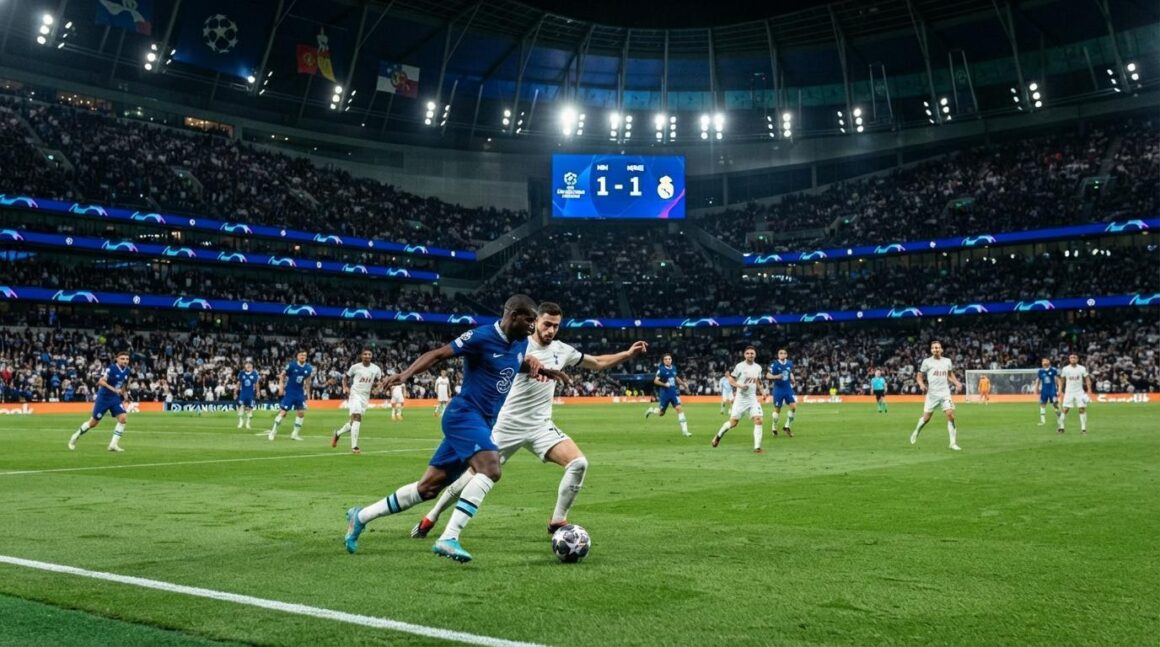
Predicting which teams will reach the Champions League final requires a combination of statistical analysis and an understanding of the wider context. Recent form can reveal momentum, while squad depth shows whether a club can survive injuries and fixture congestion. Tactical flexibility indicates how well a team can adapt, while European experience may become valuable during the most important moments.
Bettors should also consider the available odds when analyzing potential finalists. The team most likely to reach the final is not necessarily the best betting option if the market has already heavily favored it.
Ultimately, the Champions League knockout stage is about managing pressure and performing at the right moment. The clubs that reach the final are often those capable of adapting when circumstances change, recovering from setbacks, and maintaining their quality against different styles of opposition.
That unpredictability is what makes the competition so compelling. While statistical models and football predictions can help identify the strongest candidates, the knockout stage always leaves room for surprises. A carefully researched approach can help fans and bettors understand which teams have the best foundations for a deep run while recognizing that one extraordinary performance can completely change the path to the final.

 Meredith Nasrall


 Melando Faldan