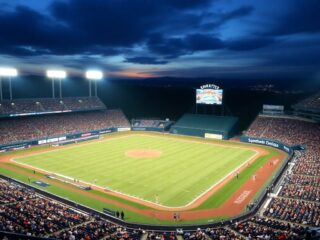
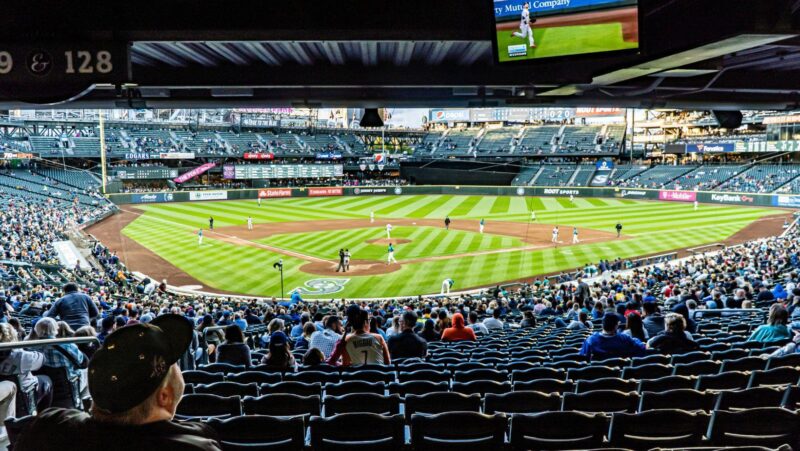
Why T-Mobile Park Plays as a Pitcher’s Park and What It Costs Mariners Hitters
 Carlenis Solvi
Every Mariners fan has had a version of this conversation. A hitter arrives from somewhere else with good numbers, spends a season in Seattle, and the numbers get worse. Then he leaves, and they get better again.
It isn't imagination. T-Mobile Park is one of the toughest places to hit in Major League Baseball, and the effect is large enough that you cannot read a Mariners hitter's raw statistics without adjusting for it.
What a Park Factor Actually Is
Park factors compare what happens in one ballpark against an average one. The scale is set so 100 is neutral, and each point above or below represents one percent more or less than league average. Statcast uses a three-year rolling average to smooth out fluky seasons, with separate factors for runs, hits, home runs, walks and strikeouts. They don't always move together, which is where it gets interesting.
Where T-Mobile Sits
Depending on which source and which window you use, T-Mobile Park's overall factor sits somewhere around 91 to 94. That puts it in the small group of genuinely extreme pitcher's parks alongside Oracle Park in San Francisco, the Oakland Coliseum and Petco Park.
For context, Coors Field sits around 114. The gap between playing half your games in Denver and half in Seattle is roughly twenty percentage points of offensive environment, which is enormous.
Here's the useful nuance, though: not every category is equally suppressed. Home runs and walks at T-Mobile run closer to league average than runs and hits do. So the park punishes a contact-and-doubles hitter considerably harder than it punishes a patient slugger who lifts the ball. That's a genuinely relevant detail when the Mariners acquire someone.
The Marine Layer
The most cited culprit, and it's a real thing rather than a folk explanation.
Cool, dense, damp air off Puget Sound reduces how far a batted ball carries. Denser air means more drag, and more drag means a ball hit with identical exit velocity and launch angle simply doesn't travel as far as it would in warm, dry conditions. Add cold temperatures, which reduce both the ball's bounce off the bat and the hitter's own responsiveness, and the effect compounds.
This is the same physics that makes Coors Field play the way it does, just running in the opposite direction. Thin mountain air, less drag, longer flight.
The Roof Is Not a Dome
A common misconception. T-Mobile Park has a retractable roof, but closing it doesn't create a controlled indoor environment the way it does in Toronto.
The Seattle roof is a cover, not a seal. Outside air still moves freely underneath it and the temperature barely changes. A former Mariners groundskeeper memorably described it as a big umbrella on wheels. It keeps the rain off. It does not warm the place up.
Players have made their feelings known on this over the years, and closing the roof has become a recurring fan campaign. The physics suggest it wouldn't help nearly as much as people hope.
Sightlines and the Batter's Eye
The less discussed factor. There's a persistent argument that the batter's eye in center field, along with glare and lighting conditions at certain times of day, makes tracking pitches harder in Seattle than elsewhere.
The evidence is suggestive rather than conclusive, but the splits are hard to ignore. Mariners hitters have shown noticeably higher whiff rates at home than on the road, and the effect has appeared stronger for right-handed batters. Mariners pitchers, meanwhile, generate more swing and miss at home, with the same handedness pattern.
Whiff rate is the interesting part, because air density explains distance, not contact. A ball you swing through never had a chance to be affected by drag. So if hitters are missing more often in Seattle, something visual is likely contributing on top of the atmospheric effects.
What It Costs the Hitters
Practically, a Mariners hitter's home statistics understate his ability, sometimes substantially. A .250 average and modest slugging in Seattle can represent better underlying performance than better-looking numbers produced in a hitter-friendly park.
This has real consequences beyond fan arguments. It affects arbitration cases, free agency valuations, and how national coverage perceives Seattle players. Hitters who spend their prime years at T-Mobile Park are systematically underrated by anyone looking at unadjusted numbers.
It also makes the park a difficult sell in free agency, which is a genuine roster construction problem rather than just an inconvenience.
What It Gives the Pitchers
The flip side is that the Mariners have built one of the sport's better pitching operations in an environment that flatters arms. Seattle ERAs look excellent partly because Seattle is an excellent place to pitch.
That's not a criticism of the pitchers, who are legitimately good. It's a caution about magnitude. When evaluating a Mariners arm, particularly one who might be traded or reach free agency, the road splits are the more honest measure.
Reading Mariners Stats Properly
Three habits help. Use park-adjusted metrics like OPS+ or wRC+ rather than raw slash lines, since those do the correction for you. Check home and road splits before concluding a hitter is struggling or a pitcher is elite. And remember that the adjustment cuts both ways: the park makes hitters look worse and pitchers look better than they are.
The broader habit is refusing to take a number at face value until you know what environment produced it. That applies to a slugging percentage and it applies to any advertised figure, including the claims made by popular usdt casino sites with instant tether transactions, where the headline speed is easy to state and the conditions attached to it rarely are. Context is the whole job.
None of which makes the marine layer any less annoying when a ball dies on the warning track in late April. But at least you know why.