In the world of ice hockey, where speed, skill, and heart converge on the frozen sheet, the action on the ice is only part of the story. Off the rink, especially in the realm of youth and amateur tournaments, a vibrant subculture of community, identity, and shared memory thrives. This tradition is quietly powered by a small but mighty collectible: the custom hockey trading pins.
These small symbols are, in fact, much more than trinkets, a kind of currency in themselves, a gesture of handshake that transcends language differences and territorial, tribal hostilities, and forms a physical relationship between the youthful representatives of various peoples. The history behind the tradition is surprisingly long, as the international goodwill exchanges started with the very first modern Olympic Games in 1896, when the officials and athletes hung plain badges to identify each other and build international friendship. The same goodwill is still living and breathing today in hockey arenas throughout North America and elsewhere.
Forging Team Identity: A Visual Roster
In the case of a hockey team of young people, the trip to a tournament is not only an investment in travel and ice time but also in a sense of identity. The choice to make a team pin that is often the responsibility of a special coach or team manager is a communal process that solidifies the special nature of the squad.
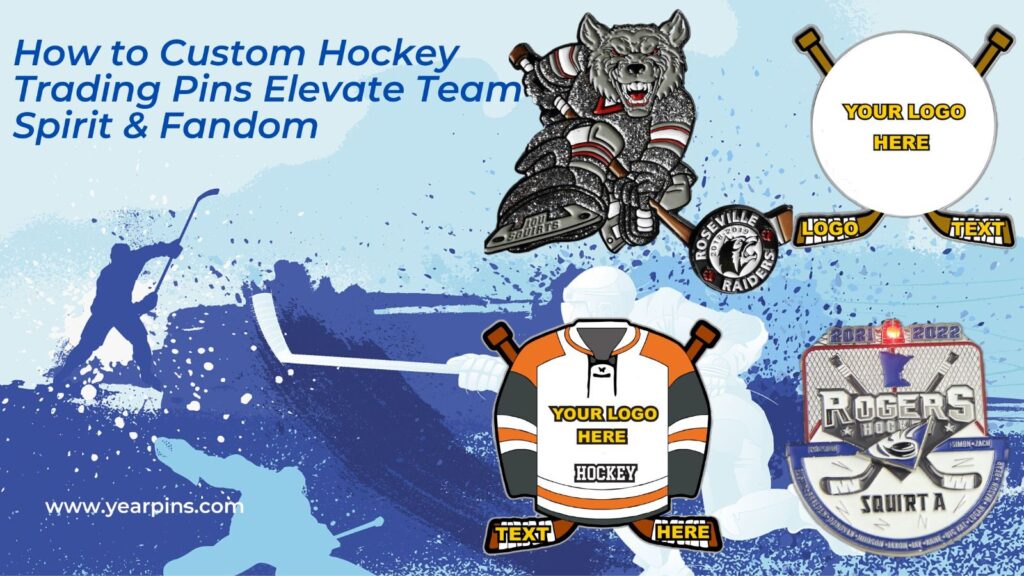
The visual rallying cry is a well-designed pin. It contains the soul of the team team mascot possibly ferocious, the skyline of the city, or clever pun on the name of the team All of it in the formal team colors. This is a crest of metal which a person can put on and it will immediately set one group of people apart among the others who are all competing. They are not merely wearing an accessory when they have them pinned to their lanyards or bags, they are wearing the story of their team.
- A Symbol of Unity: All the players, coaches, and, in many cases, even the committed family members, are given the same pin. This common property develops a feeling of belonging and equality, a point that supports the idea that all people, irrespective of their on-ice position, are a crucial component of the team journey.
- The Unofficial Mascot: Pins are often designed dynamically, occasionally with such attributes as blinking lights, motion, or glitter, all believed to be very attractive to young athletes. These unique and in many cases very complex designs make the pin of the team memorable and above all, wanted in the trading market.
The Trading Floor: Sportsmanship in Action
The magic behind the tradition of custom hockey pins comes under the brightness of the rinklights, generally in a crowded lobby or trade area. This is the point of departure of the social economy of the tournament.
To most young players, the trading action is exhilarating, like getting a breakaway goal. It is a systematized mess of lanyards, pins held in hand, and good manners that can impart lessons that no one would ever want to learn in life:
- Breaking the Ice: Players are forced to leave their comfort zone and confront an opponent that they might have just fought to the death, and have to engage in a conversation with them. It is the last lesson in sportsmanship, to shake hands and make a personal contact that goes beyond the outcome of the previous game.
- Learning Etiquette: It is an unwritten code on the trading floor. Players are taught how to be respectful, how to seek permission before touching a collection, how to find a reasonable vice, and usually weigh the perceived rarity or design of a pin with the requirements of their own collection. This will instill patience, communication, and social graces.
- A Universal Language: Sometimes, hockey tournaments attract teams representing various states, provinces, and even countries. The pin is the universal language. A complex and successful trade can still take place between two players who do not have anything in common in terms of language and who can unite because they share a passion for the game and the thrill of a new piece to add to the collection.
Tournament Traditions: Souvenirs of the Road
For the travelling hockey family, the collection of pins amassed over a season serves as a three-dimensional map of their competitive journey. Each pin is a unique memento, a snapshot of a moment in time and a geographical location.
The lanyards draped over rearview mirrors or pinned onto bedroom corkboards are not just decorative—they are archives of memories:
- The Keepsake Value: Years later, a player can look at a pin from a specific event, like the prestigious Quebec International Pee-Wee Hockey Tournament, and instantly recall the atmosphere of the arena, the excitement of the opening ceremonies, and the friends they made from the team across the continent. (You can explore the history of other major youth hockey events to see how these traditions started).
- A Legacy of Travel: The pins from far-flung tournaments—perhaps a team from Alaska or Florida facing off against a Canadian squad—carry significant bragging rights and historical weight within the community. They testify to the distance travelled and the level of competition faced. They are proof of participation in the wider hockey community.
Community and the Fan Experience
The impact of trading pins extends beyond the players to include the dedicated fan community of parents, siblings, and volunteers.
The tradition turns the often-tense environment of a major tournament into a family-friendly cultural event. Parents and younger siblings often get involved in the collecting and trading, sometimes with their own designated lanyards. The search for a particularly rare or uniquely featured pin becomes a scavenger hunt for the entire family. It gives everyone a stake in the event, regardless of who is on the ice.
This shared pursuit fosters a powerful sense of community, not just within one team’s cohort, but between rival groups who, for a few hours, set aside their competitive differences to bond over their passion for the hobby. It’s a powerful, non-monetary reminder that the hockey world is a tight-knit family, united by the love of the game.
Ultimately, the custom hockey trading pins are an elegant symbol of the values that define amateur sport: team unity, mutual respect, and the creation of indelible memories. It is a handshake, a history book, and a badge of honor, all captured in the gleam of a collectible metal disc.
Conclusion: The Enduring Legacy of the Pin
It will eventually melt the ice, the final buzzer will go off, and the trophies will be given their permanent homes, but the little, multi-colored assortment of personalized hockey trading pins will still be here. These icons have the silent history of the youth hockey experience, and they testify to early morning practices, record-breaking victories, building character, losses, and cross-country trips.
The pin is much more than a mere souvenir, and it is a building block of the amateur hockey ecosystem. It can be used as a lesson about sportsmanship, as an item that strengthens the team identity, and as an item that is recognized by all as an invitation to social interaction among the competitors. To young sportsmen and their families, the battered lanyard, loaded with the mass of the memories which have been gathered, is the final memento–a physical chronicle of a season of labor, of travel and friendship.