
 Meredith Nasrall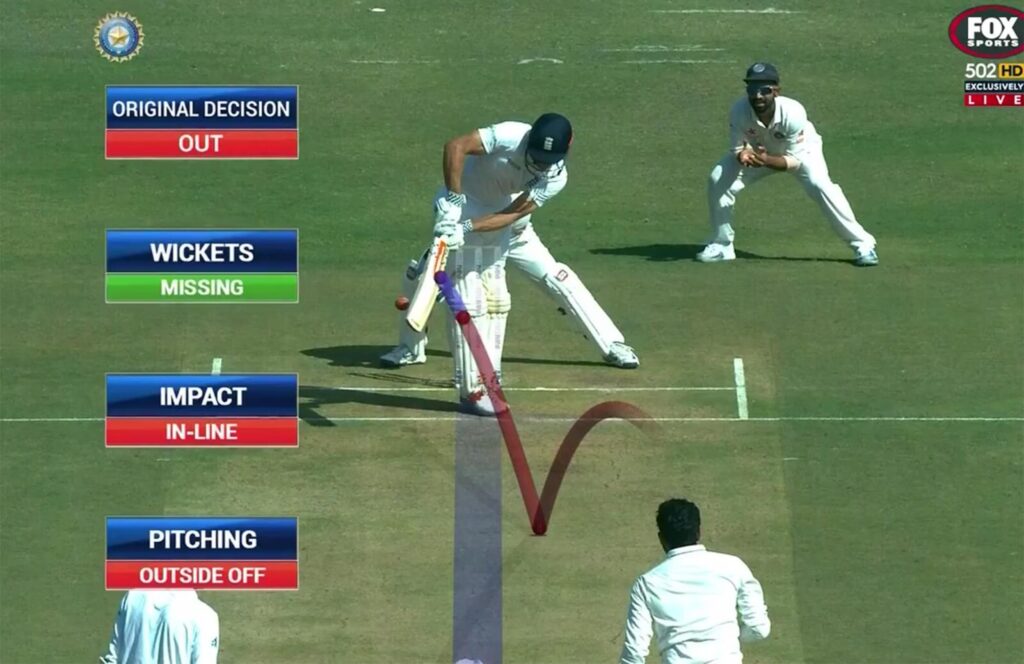
In the game of cricket, a major part of the outcome of matches relies on the subjective calling of the umpire. As heated and competitive as cricket is, it’s very common that a team that gets screwed by a decision ends up calling foul play, but for many years, umpires have had the plausible deniability to make decisions in different ways. However, thanks to the popularity of the sport, there has been a lot of new technology developed that has rendered decisions nearly unmistakable now.
Umpiring decisions are a lot more accurate as a result. Before, everything was done manually, and there were limitations due to human error, especially as events transpired very rapidly a lot of the time. In 2009 though, the IPL introduced the Decision Review System. In this system, either side now is entitled to challenge an umpire decision through an array of different technologies. They include Hawk-Eye, UltraEdge, and ball tracking. As a result, IPL umpiring decisions have jumped from 91% to 98% accuracy, which has made predicting IPL match odds more informed and precise for fans and analysts alike, since controversial calls affecting outcomes have grown less common.
Umpiring Before
Cricket uses two umpires on the field who are in charge of making every decision that’ made in a match.
Leg before wicket calls
A batsman is dismissed if the ball makes contact with him, in most cases – with his leg, before then going on to hit the stumps. This is one of the most subjective calls that an umpire ever has to make in cricket. The umpire has to say where the ball pitched, where it hit the batsman, and whether the ball hit the stumps.
Being Caught Behind
This is a question of whether the ball came in contact with the bat or gloves before reaching the wicketkeeper or slip fielders.
Low Catches
A fielder has to get underneath the ball after it flies to him in the air and catch it before it hits the ground first.
Run-Outs at the Non-Striker’s End
The umpire determines whether the bat was grounded behind the crease and the exact moment the bails were removed.
The Decision Review System
This is the set of technologies players have at their disposal to challenge umpires and make sure they made the right call. These are the main ways that’s done nowadays.
Hawk-Eye
This ball-tracking technology helps determine whether or not a ball did in fact hit the batsman’s leg before hitting the stumps. This is done using multiple high-speed cameras positioned at different places around the stadium. This is a source of evidence for the third umpire to confirm or overturn the initial decision.

UltraEdge
A snickometer determines whether or not the bat came in contact with the ball before passing on. The way this is done is by detecting the tiny edges of the bat. Microphones and visual sound waves clue umpires in on even the slightest nick.
Third Umpires
Run outs, stumpings, and boundary calls are guided to correct decisions now, thanks to slo-mo cameras. All it takes is a few seconds now for reviews. Third umpires are in charge of making them, and they have been a facet of the game since 1992, when the International Cricket Council arranged for the extra umpire.
Zing Balls
These, along with LED stumps featuring little sensors and lights, help with rulings on taken wickets by the lights activating when the bails are dislodged. This makes a huge difference in run-out and stumping decisions.
DRS Allowance per Side
Each team is only allowed so many reviews per innings. In most cases, that’s just two unsuccessful reviews in Test cricket and one or two in T20s and ODIs, as the tournament rules establish. After they’re wrong a certain number of times, they forfeit the right to make any further challenges. If they are correct, however, they retain their original quota.
About 50-60% of reviews are successful in Test matches, meaning that in most cases, the original umpire ruling is overturned. This means that the team gains a crucial wicket or preserves a key batter’s innings. This oftentimes swings the momentum in that team’s favor. Otherwise, if they lose the challenge, they will have to remain more conservative throughout the rest of the innings in contesting decisions again.
Challenge Strategy
In most cases, captains save reviews for crucial wickets late in a tense chase or do so immediately if a batter is dismissed unduly early in an innings. Bowlers now appeal with greater confidence as a result, challenging with more precision, knowing that even marginal contact with the pad is backed up by Hawk-Eye analysis. Meanwhile, by the same token, batsmen can clearly feel whether or not the ball nicked their bat or not.
Introduction of Replay Technology
Replays are a major part of the fan experience since they were introduced. Fans love to watch matches in high definition and analyze every little detail. So announcers always display replays whenever decisions are tight, voice their opinions on what they think is going to tbe the ruling, and then they commonly also bring on former officials to explain the way rulings on certain match events work. This also gives fans clarity as to the true correct decision for every little event.
All of this information is now relayed by umpire number 3 on the field if ever one of the main two umpires struggles. Fans have, for the most part, always been big supporters of instant replays. However, there are still some traditionalists that say they slow the game down too much, since these reviews take several minutes on average to complete, and evoke too much doubt in on-field umpires’ abilities.

Criticism
Another source of dissatisfaction that persists is the “umpire’s call” rule that still persists. So if the ball just barely hits the stumps or an edge detection can go either way, the original on-field decision is upheld. Critics arrgue that this creates confusion and people don’t get the logic of decisions that are made sometimes. Often, two pretty much identical deliveries can be judged differently just because of the initial call that was made.
Technical Limitations
Hawk-eye, UltraEdge, and the like are not totally infallible, despite how fancy and handy they are. The former is actually based on predictive physics, so it has a margin of error, especially when you account for spin, bounce, and pitch variations. Then there’s the fact that the snickometer can occasionally produce false positives or miss faint angles in the audio and visual signals it relies on. As for LED stumps, they usually require a clearly detectable contact, so if you just barely nick it sometimes, it doesn’t always activate.
Future of Cricket Technology
One of the biggest trends going forward in the sport is AI-assisted decision-making, where machine learning algorithms analyze ball trajectories, player movement, and game context. This will speed up the input the third umpire makes to help cut out the pauses. Cameras are also set to improve, and there will be less of a margin of error in ball-tracking systems.
Automated no-ball detection has already been trialed in some tournaments, but these systems use sensors on the crease and advanced computer vision to instantly flag overstepping deliveries. The ICC is also experimenting with augmented-reality overlays for umpires to make sure everything’s been called fairly and accurately. The goal is this will mean less controversy and inspire a higher level of trust on the fans’ and players’ part.








 Aslakzy Evjeniq