Smart lighting can change how your courts feel, not just how they look.
Key takeaways
- Smart led light setups help players see the ball earlier, react faster, and train longer with less eye strain.
- Coaches get consistent conditions, better video, and flexible scenes that match drills, clinics, and match play.
- Facility owners gain energy efficiency, lower maintenance, and a safer, more professional experience for players and spectators.
- Data from the lighting system supports smarter scheduling, zoning, and future upgrades with sensors and connected controls.
Why Lighting Quality Matters in Tennis Training
If you have ever watched a player lose a lob in a dark corner, you already know lighting quality matters.
Fast serves and quick volleys demand clear visibility. When light levels drop near the baseline, players react later, misjudge depth, and hesitate on aggressive shots. I once walked a club with a coach who pointed to one corner and said, “Nobody wants to finish a match there.”
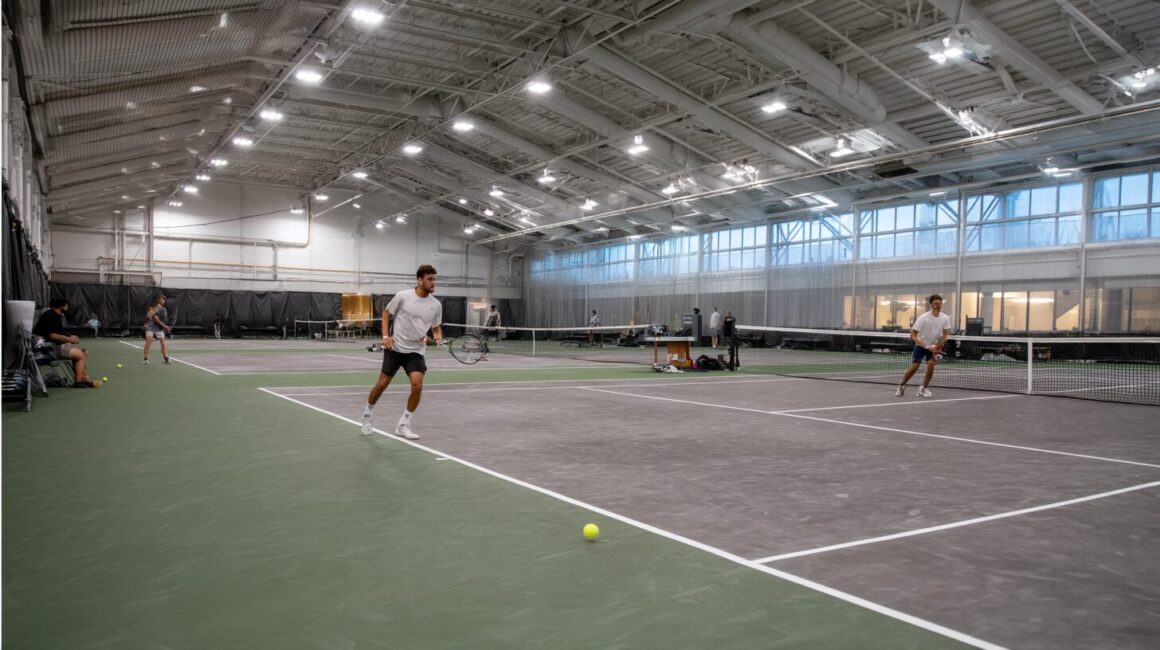
Bright but patchy light creates hot spots and shadows. Smart led light layouts aim for uniform lighting, so the ball looks the same at center court and near the fence.
Standards for training courts often target lower lux than televised events, yet still require consistent coverage. That consistency builds confidence, especially for juniors learning to trust their timing.
What Makes Lighting “Smart” in Tennis Facilities
Smart lighting starts with controllable hardware and intelligent control.
You have networked LED fixtures grouped into zones, all tied to a central control panel or app. Sensors detect motion, daylight, and occupancy, so the lighting system responds to how your tennis courts are actually used. In one indoor center I worked with, side courts now dim automatically when unused, then ramp up as players walk in.
Pre-set scenes handle training, matches, and events with a single tap. You can schedule scenes by time of day, or link them to your booking software.
Compared to traditional lighting, smart led sports setups reach full brightness instantly, hold color and output over time, and use less energy than traditional metal halide banks.
How Smart Lighting Improves Player Performance
If your goal is better player performance, lighting is part of coaching.
Proper lighting supports both horizontal and vertical visibility, so the ball stands out against the surface, backdrop, and even the sky on outdoor tennis courts. With smart control, you can slightly raise light levels for precision serve practice, then ease them back for longer endurance drills.
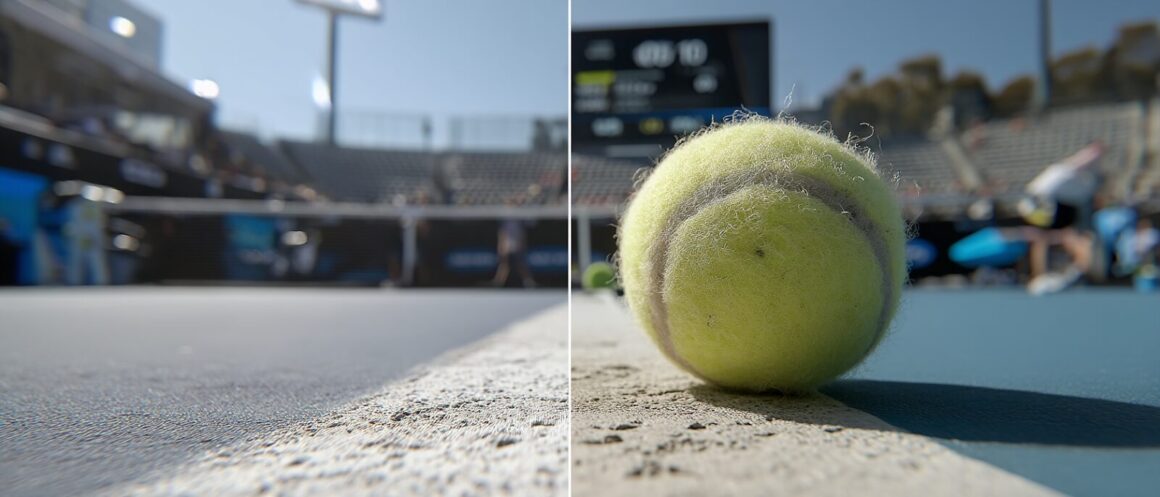
One academy I visited upgraded to a led lighting system and noticed fewer mis-hits on overheads within weeks. Coaches said players stopped complaining about “losing the ball” near the net.
You can also match training scenes to tournament conditions. Preparing for an indoor event with cooler color temperature and higher intensity? Save that profile and run it every evening for your top squad.
Enhancing Coach Effectiveness and Training Programs
Coaches see more when the court shows more.
Uniform lighting lets a coach pick up small details: grip changes, late split steps, or contact points drifting behind the body. On one project, a head coach told me he finally saw a junior’s footwork issue that had been hidden in a dim corner for months.
Smart lighting solutions help group clinics too. You can brighten a central court for advanced players while keeping surrounding courts slightly lower for beginners. Zoning lets you light only the active half during station drills, which also saves power.
When scenes follow the daily schedule, staff stop running around flipping switches. Morning clinics, afternoon privates, and league nights each get a tailored scene that repeats reliably.
Player Safety and Comfort with Smart Lighting
Safety often shows up in the small moments.
Glare from poorly aimed fixtures can blind a player during an overhead. Smart optics and dimming reduce direct glare and reflections, so players track the ball instead of squinting. I remember a veteran player telling me, “I stopped ducking on lobs once they fixed those court lights.”
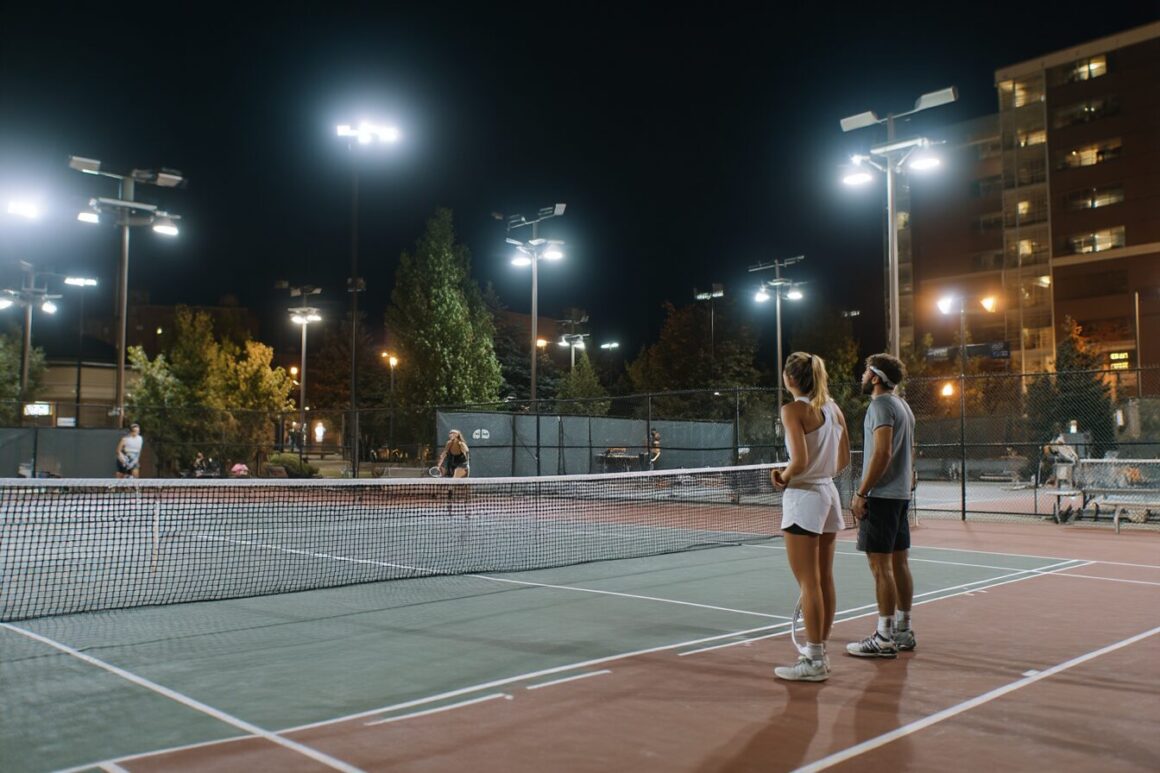
Uneven lighting creates shadows where feet disappear, which raises the risk of rolled ankles on wide balls. Smart sports lighting design targets better uniformity, so movement feels predictable.
Beyond the playing area, integrated pathways and parking lights guide people safely in and out. Low-level scenes after closing keep staff comfortable during cleanup without wasting power.
Energy Savings and Operating Costs for Facility Owners
From a business angle, smart lighting is about control and cost.
LED fixtures already use less energy than traditional sources, but controls push energy efficiency further. Dimming during low-intensity drills, shutting off empty courts, and trimming output on bright days all cut kWh. One six-court club I worked with saw double-digit energy savings in the first year after installing led sports lighting with occupancy sensors.
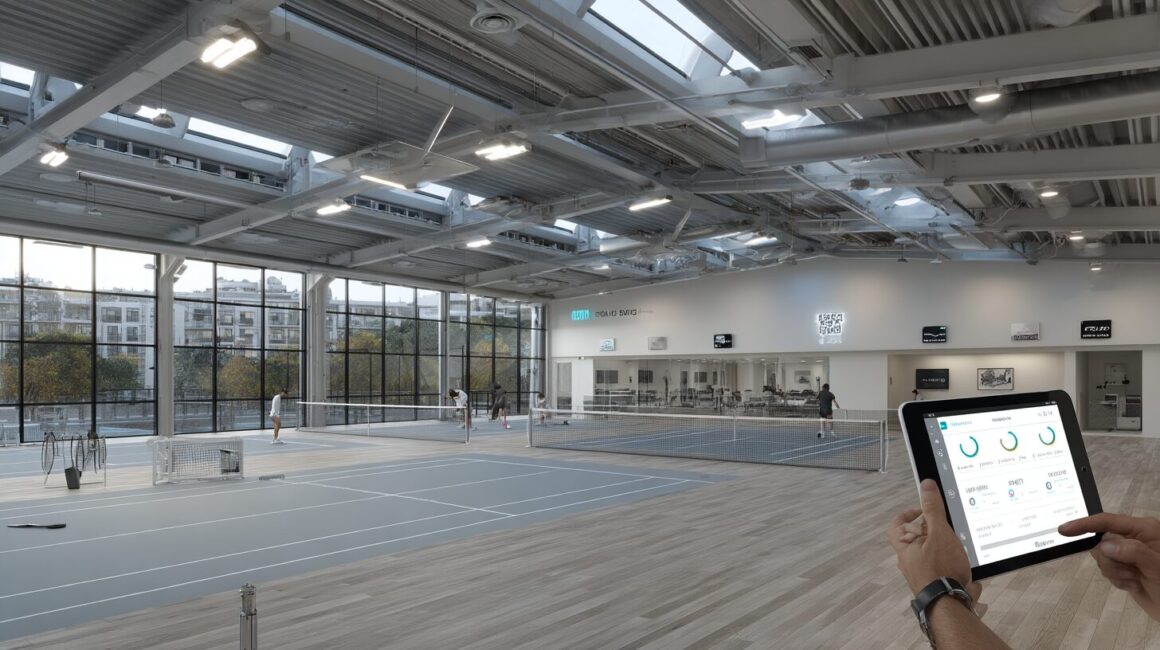
Maintenance drops too. LEDs last longer than legacy lamps, so you schedule fewer lift rentals and closures. Remote monitoring flags issues before players complain.
When you add up energy, maintenance, and better court usage, the payback period often looks shorter than managers expect, especially in busy tennis facilities.
Designing Smart Lighting for Tennis Training Facilities
Good lighting design starts with how your courts are used, not just where poles can fit.
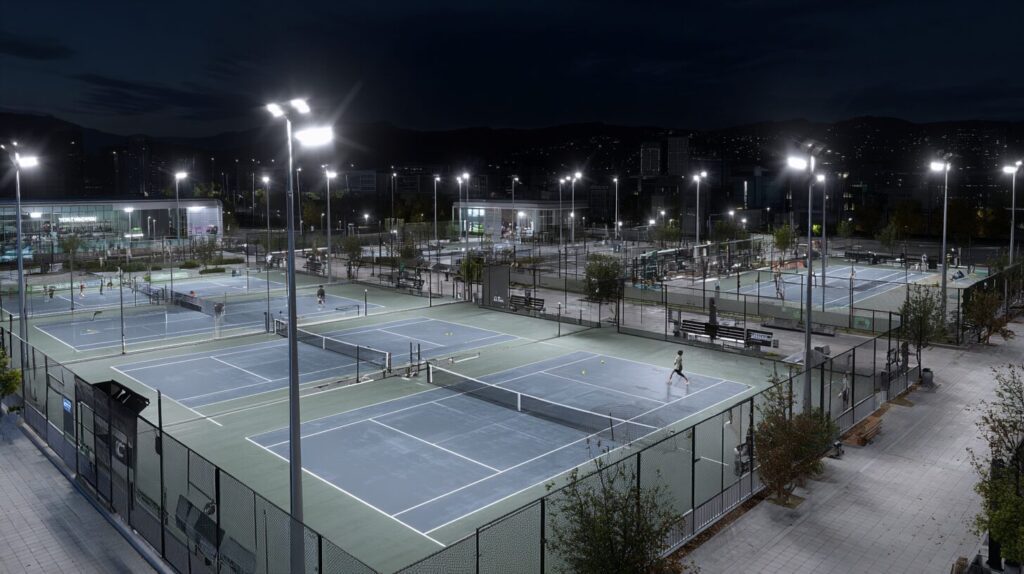
Training centers need enough intensity and uniformity for serious practice, without the glare levels of a televised stadium. Indoor courts deal with ceiling height, wall color, and surface reflectance. Outdoor layouts juggle pole height, spill control, and neighbors who do not want light in their windows.
This is where smart controls refine classic layouts. You can tune scenes for singles or doubles, or dim outer practice courts while keeping a central show court brighter.
If you already have a basic tennis court lighting setup, you might phase in controls first, then upgrade fixtures later, as budget allows.
Smart Features That Add Value Beyond Light
Once your lighting system is connected, it becomes part of your operations toolkit.
Motion and occupancy sensors bring courts up gently as players arrive, then fade them down after they leave. Daylight sensors on outdoor courts help the led light output ramp up as natural light fades, so players barely notice the transition.
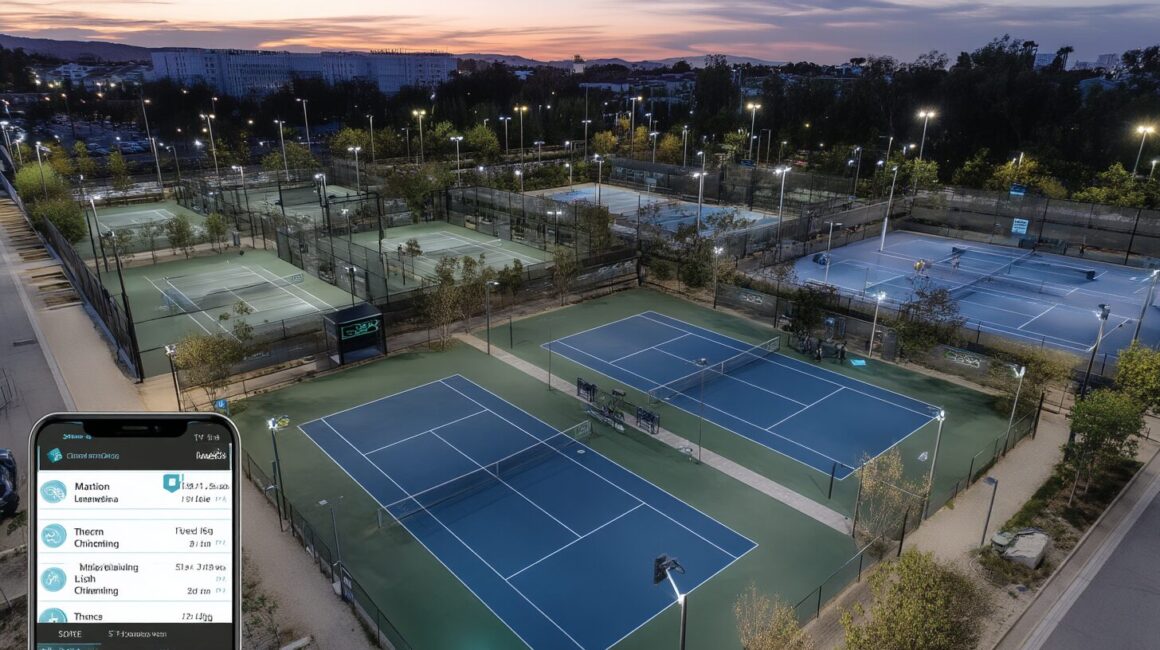
Integration with booking systems means courts turn on shortly before a reservation and off afterward. That cuts wasted runtime and makes the experience feel more polished.
Some managers use usage data from the system to see which courts stay busiest, then adjust pricing or plan future expansions. It is a simple way to match investment with demand.
Planning an Upgrade to Smart Lighting
If you walk your courts at night and feel something is off, start with a basic assessment.
Stand at each baseline and corner. Ask yourself where visibility drops, where glare hits your eyes, and where shadows hide the ball. Coaches usually know the “bad spots” already.
From there, a lighting audit with a specialist can measure light levels and map problem areas. Bring court dimensions, schedules, and any complaints you have heard.
You do not need to replace everything at once. Some facilities retrofit controls onto existing fixtures, then move to full LED and smart controls later. The key is planning for future capacity so you do not box yourself in.
Real-World Examples of Smart Tennis Lighting
A junior academy I worked with had uneven, aging fixtures and constant complaints. After a smart LED upgrade, coaches reported clearer video, fewer misjudged lobs, and happier parents who felt training looked more professional.
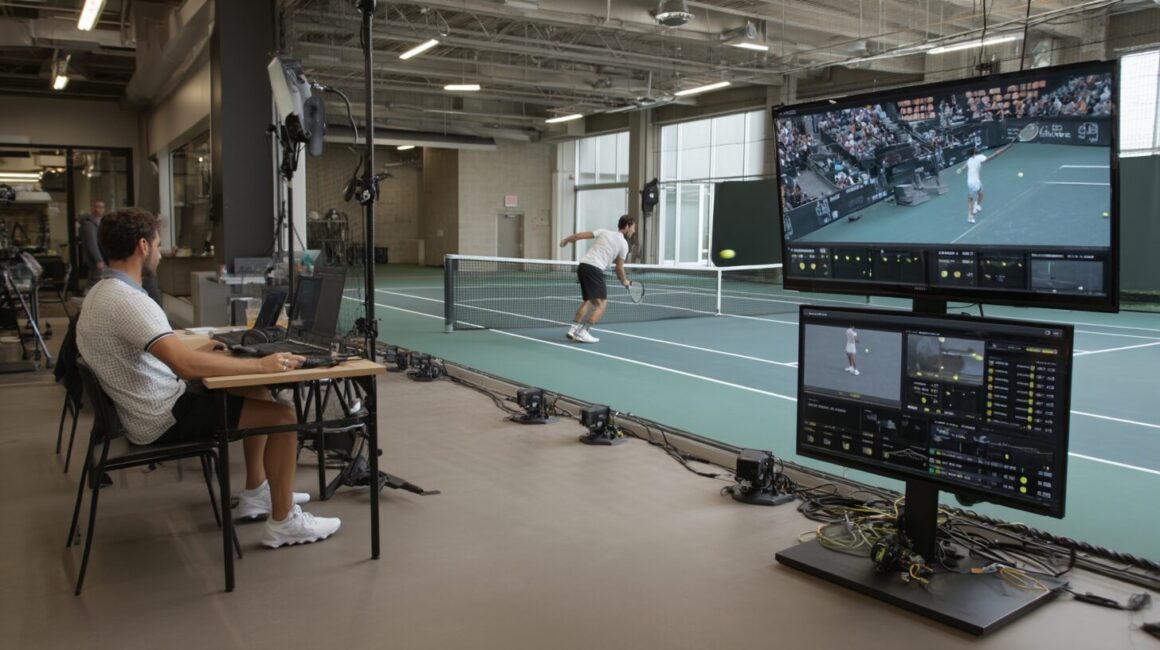
Another multi-court club focused on operating costs. By zoning courts and tying scenes to bookings, they cut runtime on empty courts and saw noticeable reductions in monthly bills. Staff loved not chasing light switches every night.
A high-performance center preparing players for pro events tuned scenes to match specific tournaments. They matched color temperature, intensity, and even background brightness, so players arrived at events feeling like they had already been there.
Practical Tips for Your Tennis Facility
If a full upgrade feels big, you can still move forward.
Start by cleaning lenses, checking aiming, and replacing the worst fixtures with modern led light units. Even that step can improve visibility and comfort.
Ask coaches and players where the court feels too bright or too dim. Their feedback helps you shape future lighting options and scenes.
After any change, track bills, complaints, and compliments. Over a season, you will see whether the new lighting technologies, controls, and layouts truly enhance play and improve visibility across your courts.