Klyra Xevorn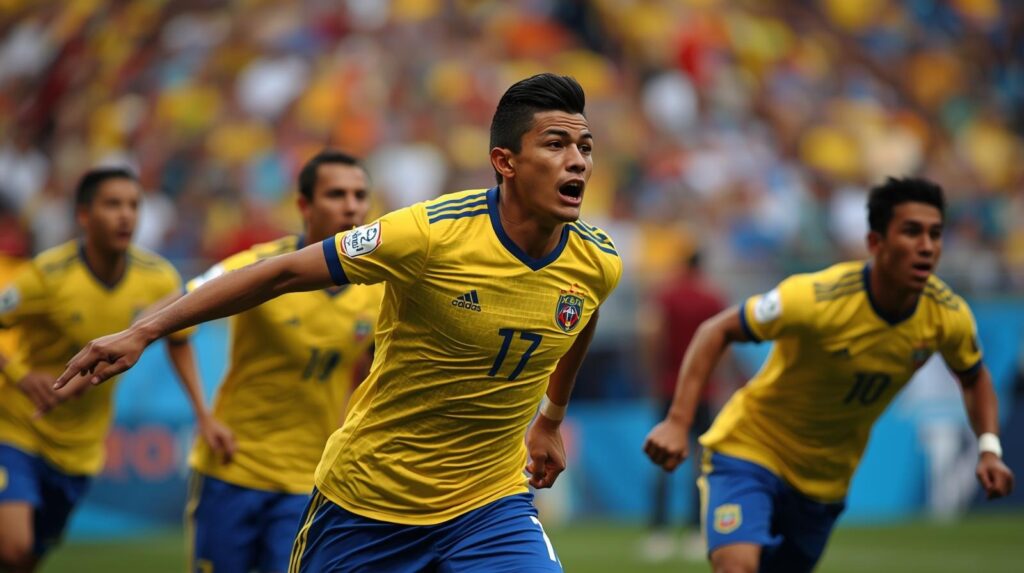
For any Ecuadorian, football is much more than a sport; it is the common thread that unites the country’s three regions under a single rallying cry. When a FIFA date arrives or a continental tournament is played, the atmosphere shifts, the streets turn yellow, and the national conversation revolves around a single axis. In this high-stakes environment, following La Tri has become a comprehensive experience that blends unconditional loyalty with advanced digital analysis. Today, fans don’t just wait for the opening whistle; they dive into statistics and projections to understand how our team stands against the continent’s powerhouses.
Tactical Evolution: From Hope to Reality
Ecuadorian football has undergone a stunning metamorphosis in recent years. We have evolved from a team looking to “put up a good fight” to a respected and feared side throughout South America. This transformation is no accident; it is the result of a generation of players trained in the European elite. Stars playing in the Premier League or the Bundesliga have brought tactical rigor and physical discipline that have raised our team’s competitive ceiling.
For sports analysts, this shift means that national team matches now have a much more solid and predictable data set. We no longer rely solely on individual inspiration, but on a structured system of play. Analyzing our low-block defensive performance or our midfielders’ quick transition capabilities allows for much more precise projections, moving analysis away from simple optimism and into the realm of statistical probability.
Betting on Everyone’s Team: Heart vs. Reason
One of the biggest challenges for local fans is separating emotion from strategy. Betting on national team matches involves an internal struggle between the desire for victory and what the numbers dictate. However, the modern bettor in Ecuador has learned to professionalize their passion. Using analytical tools allows them to identify markets where the team is strong, regardless of the final result (1X2).
For example, statistics show that our team tends to be very dominant in corner kick markets and ball recoveries due to the players’ physical intensity. Likewise, the home-field advantage in high-altitude cities remains a statistical differentiator that international bookmakers sometimes underestimate. Learning to read these competitive advantages is what allows supporting the team to be a smart financial decision as well as an emotional impulse.
The Big Stages: Qualifiers and Copa América
The international calendar offers moments of high tension where analysis becomes crucial. The South American Qualifiers are considered the toughest in the world, and every point earned is a tactical battle. During these periods, the flow of information is constant—from the condition of the pitch to potential absences due to yellow card accumulation.
In short tournaments like the Copa América, analysis must be even more dynamic. Accumulated fatigue from players coming off grueling European seasons and the coaching staff’s rotation capacity are variables that can change odds in a matter of hours. Fans who are “connected” to digital analysis platforms have the ability to react to this news in real-time, turning their knowledge into a tool for success during the ninety minutes of play.
Conclusion: Identity and Technology
Following the national team in the digital age is an experience that transcends the screen. It is the union of our historical identity with the most sophisticated tools for analysis and entertainment. At the end of the day, football gives us the opportunity to celebrate our culture, and doing so from a secure, well-informed platform enhances that emotion. With a generation of players who fear no rival and a fanbase increasingly skilled in data usage, our team’s path toward global success is being experienced with unprecedented intensity and intelligence.

 Carlenis Solvi
 Melando Faldan




 Meredith Nasrall