Meredith Nasrall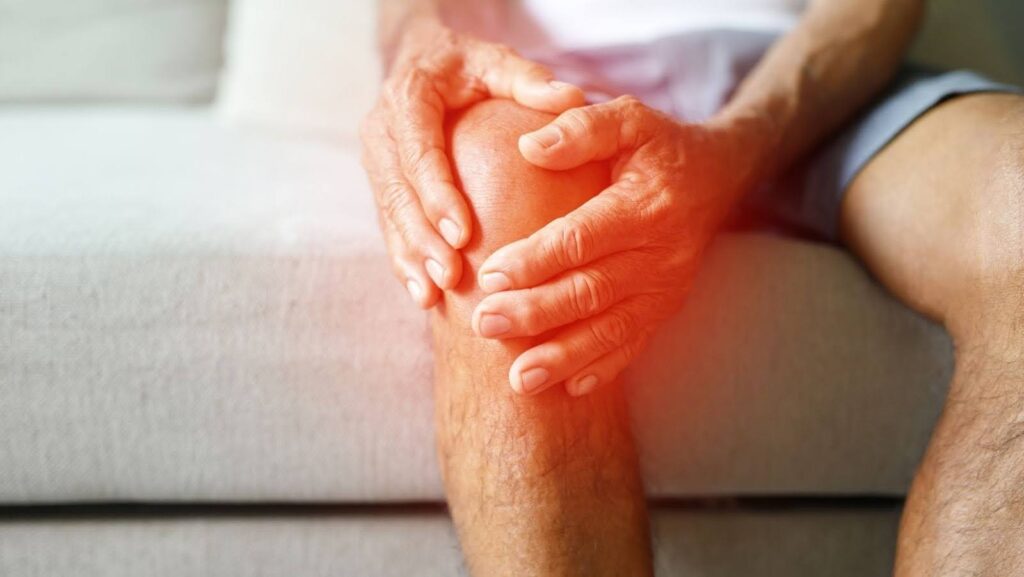
Hitting forty is a strange milestone. One day you are the person who can play two hours of pickup basketball and grab a beer after; the next, you wake up wondering why your left knee sounds like a bag of gravel. It gets more complicated when you carry an old injury into this decade. That lingering tear or the fracture from your twenties starts to talk back. But staying in the game is not about recapturing youth. It is about a smarter, more calculated kind of longevity.
The Mental Shift: From Peak Performance to Pure Durability
We spend our younger years obsessed with personal bests. Faster miles. Heavier plates. Once you cross the forty-year mark, especially with a “bad” shoulder or a “weak” ankle, the goalposts have to move. You are no longer training to be the best in the gym; you are training to ensure the gym does not break you.
This is a hard pill to swallow for the competitive types. It feels like giving up. It is actually the opposite. It is about resource management. Your body has a finite amount of recovery “currency” every week. If you spend it all on one high-impact session, you are bankrupt for the next five days. Durability means finishing a workout feeling like you could have done ten percent more. That ten percent is your insurance policy.
The Chemistry of Moving Parts
Joint health changes. There is no way around the biological reality that the fluid cushioning our hinges starts to thin out. When you have a history of injury, that wear and tear is localized and aggressive. It is not just “aging”; it is an accelerated mechanical friction. This is where modern science bridges the gap that nature left behind.
Maintaining the integrity of the cartilage is the primary battle for the middle-aged athlete. Sometimes, the body needs a bit of structural assistance to keep things moving without that grinding sensation. Finding ways to supplement the natural lubrication of the joints can change the entire trajectory of your decade. If you can manage the internal environment of a knee or hip, you can keep the impact high enough to maintain muscle but low enough to avoid chronic inflammation. For those looking to sustain their activity levels, the option to purchase synvisc often becomes a conversation about regaining that lost “buffer” zone within the joint itself. It is about physical maintenance, similar to how you would treat a high-performance engine that has seen some heavy miles.
Structural Maintenance: The Bulletproof Routine
You cannot just “wing it” anymore. The pre-game ritual used to be tying your shoes; now, it is a twenty-minute process of waking up the nervous system. If you have an old injury, that area is likely surrounded by scar tissue or compensated for by other muscles. You have to be deliberate.
- Isometrics for Tendon Load: Instead of jumping straight into movements, hold positions. Isometrics build strength at the tendon level without the shearing force of repetition.
- Controlled Articular Rotations: Move every joint through its full range every single morning. If you don’t use the range, the body “locks” it to protect you.
- Low-Impact Aerobics: Swap one run a week for a swim or a heavy ruck. Your heart doesn’t know the difference, but your ankles certainly do.
The Myth of “Getting it Back”
There is a psychological trap in post-injury life: the desire to return to the exact version of yourself that existed before the “pop” or the “snap.” That version is gone. Not because you are “old,” but because your biomechanics have adapted.
Instead of trying to force your body back into old patterns, you have to build a new map. This involves a lot of boring work. It involves single-leg balances and glute activation drills that feel like they are doing nothing until you realize your back stopped aching. It is about the subtle stuff. We focus so much on the big muscles, but the small stabilizers are the ones that actually keep the joints centered.
Nutrition and the Internal Environment
What you eat at forty-five matters infinitely more than what you ate at twenty-five. Inflammation is the enemy of the injured athlete. A weekend of processed sugar and alcohol shows up in your joints forty-eight hours later. It creates a “fog” in the tissue.
Hydration also takes on a new meaning. Your discs and your cartilage rely on water to stay plump and functional. If you are chronically dehydrated, you are essentially asking your bones to rub together with no padding. It is a mechanical failure waiting to happen. Focus on high-quality proteins to repair the constant micro-tears and plenty of healthy fats to keep the systemic inflammation in check.
Consistency Over Intensity: The New Mantra

The biggest mistake is the “weekend warrior” syndrome. Sitting at a desk for forty hours and then trying to play a high-intensity tennis match on Saturday is a recipe for a ruptured Achilles. The body likes frequency. It likes to know that movement is a daily requirement, not a weekly surprise.
Short, daily sessions are far superior to one massive blowout. If you have thirty minutes, use them. Even if it is just mobility work. You are sending a signal to your brain that these pathways need to stay open. When you stop moving, the “rust” sets in.
Listening to the “Check Engine” Light
You have to learn the difference between “good” pain and “bad” pain. Good pain is the burn of a muscle working hard. Bad pain is the sharp, electrical, or dull ache deep inside a joint. In your youth, you might have pushed through it. At forty, pushing through a sharp pain is a six-month mistake.
The ego is usually what gets us hurt the second time. We see someone younger doing something and we think we should be able to do it too. Maybe we can. But the cost-benefit analysis has changed. Is a thirty-second faster 5k worth a month of limping? Usually, the answer is no.
Rest is a Weapon
In our younger years, rest was what happened when we were lazy. Now, rest is an active part of the training cycle. It is when the actual repair happens. Sleep is the most potent recovery tool you have. It is when growth hormone is released and when the nervous system resets.
If you are not sleeping, you are not recovering. If you are not recovering, that old injury is just waiting for a moment of weakness to flare up. Treat your sleep with the same discipline you treat your workouts. Dark room. Cool temperature. No screens. It sounds like overkill until you realize how much better your knees feel after eight hours of deep rest.
The Long View
Staying in the game after forty is a privilege. It requires a level of body literacy that most people never bother to develop. You have to become an expert on your own mechanics. You have to know which movements are “safe” and which ones require extra caution.
It is a slower process, sure. But it is also more rewarding. There is a specific kind of satisfaction in being the person who can still move well, still play, and still compete while others have retired to the sidelines. It is not about being the fastest anymore; it is about being the one who is still there, year after year, refusing to let an old injury dictate the terms of their life. Keep moving, keep lubricating the system, and keep your eyes on the next decade, not the last one.

 Melando Faldan







 Klyra Xevorn